
Leading Through Change Takes More Than a Plan

 As a leader this year, you’ve navigated change. Have you ever stopped to think about how or what it took? Whether it’s implementing a new system for tracking assignments, an important team member leaving, or even a major project coming to a close. Here’s what I’ve learned leading the team at Leverette Weekes and clients through the first nine months of this year. Not all change is a crisis. But even ordinary transitions can be disorienting. As a leader, helping your team embrace uncertainty requires compassion and clarity Acknowledge their concerns. Encourage questions and suggestions. Listen without immediately trying to fix the problem. And recognize that people may move through the same change at different speeds. Be a Leader People Can Turn To During times of change, be a leader who communicates regularly and is willing, when necessary, to admit, “I don’t have that answer yet.” When leaders are visible, accessible, and honest about what they know—and what they don’t—the team is better positioned to navigate the uncertainty that naturally arises when things shift from one state to another. They may not agree with every decision, but they can better understand why decisions are being made and what the end goals are. Give People Room to Adapt When organizations move too quickly, even well-intentioned initiatives can overwhelm the people responsible for making them work. Change fatigue often comes not from one major transition, but from a succession of changes with little time to absorb them. Effective leaders consider the pace of change alongside the urgency of the business. What needs to happen now? What can wait? Where would additional training, support, or time make a difference? Pacing gives people the room they need to adapt—and makes progress more sustainable. As a communications agency, we’ve helped clients navigate change, including moving headquarters, closing a department, announcing a brand-new organization, and preparing for the departure of a long-term leader and the arrival of their successor. We’ve helped organizations translate complex change into messages that leadership, staff, and stakeholders can understand. More than putting out a press release, effective change communications should address:
Our role as a communications partner is to help leaders communicate with clarity, consistency, and candor. We help shape the message, but we also encourage organizations to listen—to understand how change is landing and where communication needs to improve. The goal isn’t simply to get people through change. It’s to help them move forward with confidence, connection, and a clear understanding of where they’re going. |
 |
Client Wins

GreenLight Fund Twin Cities
GreenLight Fund Twin Cities is building visibility for both its work and the community-based organizations it invests in—and Leverette Weekes is helping shape how those stories are introduced to the market.
From positioning GLFTC’s leadership to amplifying investment partners, including IRTH and LEAD, our work has helped the organization navigate the communications that come with expanding its presence and introducing new partners to broader audiences.
That visibility extends to Executive Director Simone Hardeman-Jones, who recently joined philanthropic leaders at the Blacks in Philanthropy Conference for a conversation on scaling Black-led organizations and trust-based philanthropy.
The discussion explored what it takes to move beyond traditional funding models, build authentic relationships with community-based organizations, and ensure Black-led organizations have the trust, resources, and support needed to grow their impact.
Next month, Simone will bring that perspective to Independent Sector’s National Summit, continuing the conversation around power, decision-making, and whose knowledge and lived experience are valued in philanthropy.
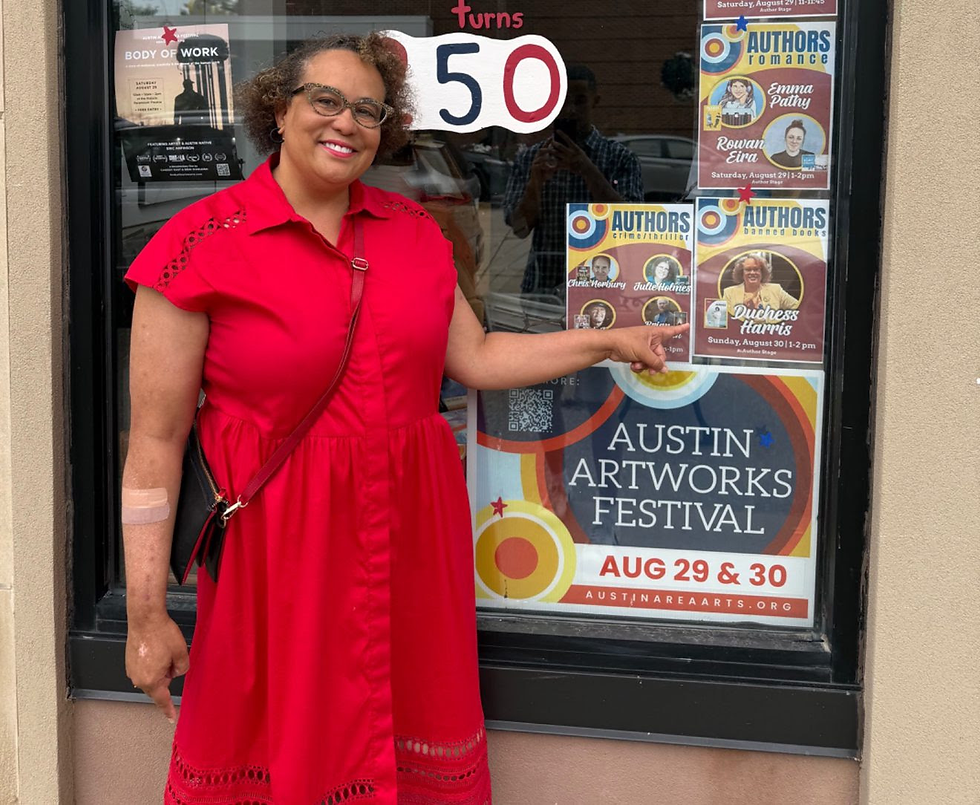
Dr. Duchess Harris
Dr. Duchess Harris continues to bring her scholarship beyond the classroom and into timely national conversations about whose stories are told—and who gets access to them.
In August, Dr. Harris was featured at the Austin ArtWorks Festival for a special conversation on banned books. As an accomplished author whose own works have been among those challenged or removed from schools, she brought a deeply personal perspective to the discussion, exploring the broader implications of book bans, censorship, representation, and access to diverse perspectives.
Her participation is another example of how Dr. Harris is using her scholarship and lived experience to engage audiences on issues shaping education, culture, and public discourse.
Words Create Wins

Words like serve, empower, give voice, and help may sound positive—but they can unintentionally position one group as the decision-maker and another as the recipient.
The shift is subtle, but the message is different.
Strategic communication isn’t only about making your message sound better. It’s about making sure your words accurately reflect your values, your relationships, and the role you want to play.
Before you hit send, ask: What do my words communicate about who has the power?


Comments